Did you know “A Taste of Honey” wasn’t originally a Beatles song? 🎙️ It was first written for a Broadway play in 1960—then popularized by crooners like Lenny Welch.
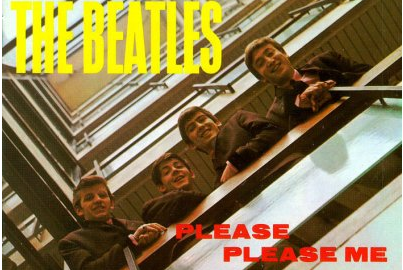
🎸 The Beatles recorded it in 1963 for Please Please Me, with Paul McCartney on lead vocals. He nailed it in just one take!
🎚️ Producer George Martin added the echo effect to give it that dramatic flair. And here’s a kicker—Paul never really liked the song much. He later said it was more of a nod to showbiz tradition than true Beatle style.
📸 Little known fact: They performed it live at the Cavern Club—and George Harrison would sometimes do backup vocals off-mic!
Did you know that the iconic opening chord of A Hard Day’s Night baffled musicians for decades? It wasn’t just George on his Rickenbacker 12-string. It was actually a mix of instruments: George’s guitar, Paul’s bass, John’s acoustic, and even a piano from George Martin!
🎙️ And the title? It came from Ringo! After a long day filming, he said, “It’s been a hard day’s… night!” John loved it and wrote the song that night!
🎙️ One more surprise—George’s jangly guitar sound? It inspired The Byrds, Tom Petty, and the entire jangle pop genre. That’s how influential it was!
🎬 [Text on screen]: “One chord that changed rock music forever 🎸” #BeatlesTrivia #GeorgeHarrison #HardDaysNight
Did you know The Beatles once played a gig to just 18 people?
🎙️ On December 9, 1961, they performed at the Palais Ballroom in Aldershot, England. Promoter Sam Leach aimed to showcase them to London record executives but mistakenly chose a venue 37 miles away from London.
Paul McCartney wrote this song in Hamburg, Germany while The Beatles were the house band at The Star Club, where they spent much of 1962 improving their skills with constant live performances. An early favorite, the band performed the song at their Parlophone Records audition on June 6, 1962.
This is a great example of how the group forged a very personal relationship with their fans through songs that spoke directly to the listener. The words “I,” “You,” “Me” and “Love” show up in many of their early hits, creating a strong connection between band and listener.
This was used as the B-side of “Love Me Do,” the first Beatles release in England. It was going to be their first single, but Peggy Lee had a song out with the same title so the record company decided to release “Love Me Do” instead.
This guitar lesson on how to play “Love Me Do” from The Beatles’ Please Please Me album is brought to us by Les Titford. Check out his youtube channel/user – greenplectrumfilms.
Les is a Beatles fan way back in 1965 when he was just 10 years old! The albums Rubber Soul through to Sgt. Peppers is his most favorite albums.
According to Les, these albums contained the cleverest songs and lyrics as well as some of the most innovative recording techniques used up to that point (excluding Yellow Submarine)
“I’m Happy Just to Dance with You” is a song written by John Lennon and Paul McCartney and recorded by the Beatles for the film soundtrack to A Hard Day’s Night. Lead vocals are by George Harrison, whose performance in the film marked the first commercial music video segment with Harrison singing lead.
This post and video tutorial will try teach you how to play “I’ll Be Back”. This is the final song on A Hard Day’s Night. I’ll Be Back was written mostly by John Lennon, and was a reworking of the chords to Del Shannon’s 1961 hit Runaway.
The Beatles recorded “I’ll Be Back” in 16 takes on 1 June 1964. The first nine were of the rhythm track, and the last seven were overdubs of the lead and harmony vocals, and a guitar overdub by Paul McCartney.[5]
The Anthology 1 CD includes take two of “I’ll Be Back”, performed in 6/8 time. The recording broke down when Lennon fumbled over the words in the bridge, complaining on the take that “it’s too hard to sing.” The subsequent take, also included on Anthology, was performed in the 4/4 time used in the final take.
“I Should Have Known Better” is a song by English rock band the Beatles composed by John Lennon (credited to Lennon–McCartney), and originally issued on A Hard Day’s Night, their soundtrack for the film of the same name released July 10, 1964.
This particular song was issued as the B-side of the U.S. single A Hard Day’s Night released July 13, 1964. An orchestrated version of the song conducted by George Martin appears on the North American version of the album, A Hard Day’s Night Original Motion Picture Soundtrack.
On this tutorial post, you will learn how to play “I should have known better”. You will learn the guitar chords and strumming patter which is the two important things to know. You will also learn the licks used or the little solo.
“Can’t Buy Me Love” is more of Paul McCartney’s song and credited to Lennon-McCartney. It was released by the Beatles on the A-side of their sixth British single, “Can’t Buy Me Love”/”You Can’t Do That”.
While in Paris, the Beatles stayed at the five star George V hotel and had an upright piano moved into one of their suites so that song writing could continue.[6] It was here that McCartney wrote “Can’t Buy Me Love.” The song was written under the pressure of the success achieved by “I Want to Hold Your Hand” which had just reached number one in America. When producer George Martin first heard “Can’t Buy Me Love” he felt the song needed changing: “I thought that we really needed a tag for the song’s ending, and a tag for the beginning; a kind of intro. So I took the first two lines of the chorus and changed the ending, and said ‘Let’s just have these lines, and by altering the second phrase we can get back into the verse pretty quickly.'” And they said, “That’s not a bad idea, we’ll do it that way”.
The song’s verse is a twelve bar blues in structure, a formula that the Beatles seldom applied to their own material